
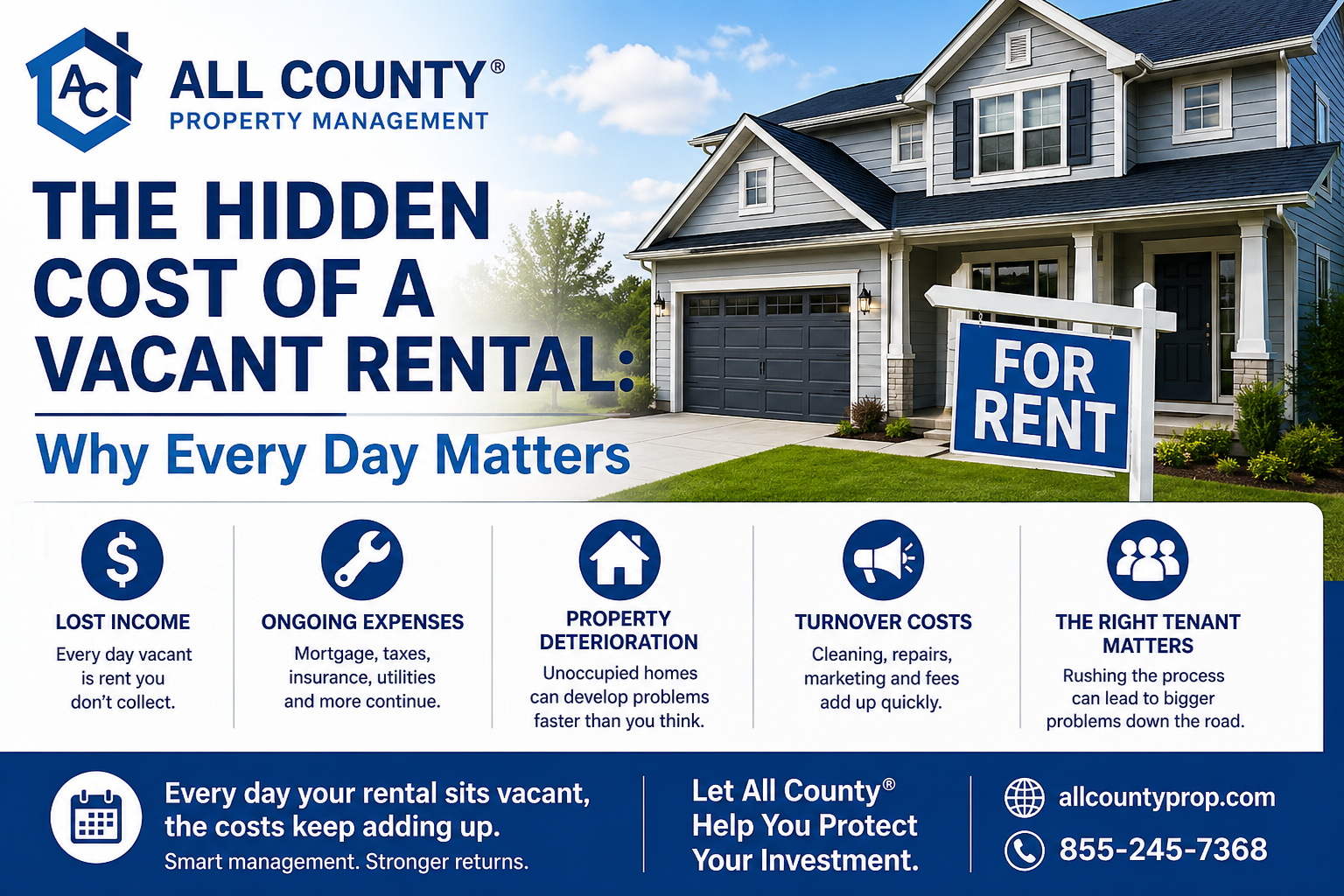
The Hidden Cost of a Vacant Rental: Why Every Day Matters
A vacant rental property can look harmless from the outside. The home is still there, the mortgage hasn’t changed, and you’re waiting for the right tenant to come along.
But financially, the clock is ticking.
Every day a rental sits empty represents more than lost rent. Owners may still be paying the mortgage, insurance, taxes, utilities, landscaping, maintenance, and other expenses—without rental income helping offset those costs.
That’s why reducing unnecessary vacancy is one of the most important parts of protecting the performance of a rental property.
Vacancy Costs More Than Lost Rent
The most obvious cost of vacancy is the rent you aren’t collecting.
Consider a rental that would normally generate $2,100 per month. That’s roughly $70 in potential rental income for every day the property remains vacant.
A two-week vacancy could represent nearly $1,000 in unrealized rent before considering any other expenses.
But lost rent is only part of the picture.
During a vacancy, an owner may still be responsible for:
- Mortgage payments
- Property taxes
- Insurance
- Electricity and water
- Lawn and exterior maintenance
- HOA expenses
- Pest control
- Cleaning and repairs
- Advertising and leasing expenses
The property may not be producing income, but many of its expenses continue.
Discover practical ways to reduce rental vacancy rates without lowering your rent while protecting your property’s long-term value.
Turnover Can Reveal Unexpected Expenses
When one resident moves out, owners often discover work that needs to be completed before the next resident can move in.
Walls may need touch-ups or repainting. Carpets or flooring may need attention. Appliances might require repairs. Landscaping may need improvement. Minor maintenance items that went unnoticed during the tenancy can suddenly become obvious.
Individually, these projects may seem manageable. Together, they can add both expense and additional days to the vacancy period.
A well-organized turnover process can make a significant difference.
Ideally, owners should know what work is needed, which vendors will handle it, what the expected costs are, and when the property can return to the market.
Waiting until the property is already vacant to begin making those decisions can extend downtime unnecessarily.
Rental property owners should also understand how vacancy affects their expenses and tax reporting. The IRS provides detailed guidance on residential rental income and expenses, including expenses associated with maintaining a property while it is vacant.
An Empty Property Still Needs Attention
Vacant properties don’t stop needing care.
In fact, some problems can become harder to detect when nobody is living in the home.
A small plumbing leak may go unnoticed. An HVAC problem might not be discovered quickly. Landscaping can become overgrown. Mail or debris can accumulate. In some situations, an obviously vacant home may also attract unwanted attention.
Regular oversight during a vacancy can help identify issues before they turn into larger and more expensive problems.
Pricing Too High Can Become Expensive
Owners understandably want to maximize rental income. But asking the highest possible rent isn’t always the same as maximizing the property’s overall return.
Suppose the market supports approximately $2,000 per month, but an owner lists the home at $2,200.
Holding out for the additional $200 sounds appealing.
But if the higher price causes the property to remain vacant for several additional weeks, the lost rent may outweigh much of the potential increase.
Effective rental pricing requires balancing several factors, including:
- Current market conditions
- Comparable rental properties
- Property condition
- Location
- Amenities
- Seasonal demand
- Tenant interest and showing activity
The goal isn’t simply to obtain the highest advertised rent.
The goal is to find a qualified resident at a market-supported rental rate while minimizing unnecessary vacancy.
The Wrong Tenant Can Cost More Than Vacancy
Vacancy creates pressure.
When a property has been sitting empty, it can become tempting to approve an applicant quickly just to start collecting rent again.
That’s when owners need to be particularly careful.
Reducing screening standards to fill a property faster can create much larger problems later. Depending on applicable laws and established screening criteria, a thorough screening process may include reviewing factors such as credit history, rental history, income qualification, and other permissible information.
A qualified, responsible resident can be worth waiting for.
The objective should never be simply to fill the property.
It should be to place the right qualified tenant while following consistent screening standards and applicable fair housing requirements.
Tenant screening should also be conducted consistently and in accordance with applicable housing laws. Property owners can review HUD’s Fair Housing Act information to better understand federal protections that apply to rental housing.
Good Marketing Can Reduce Unnecessary Vacancy
A rental cannot attract qualified applicants if potential residents don’t know it is available—or if the listing fails to make a strong first impression.
Successful rental marketing starts with presenting the property effectively.
That may include:
- Clear, well-lit property photos
- An accurate and compelling description
- Competitive rental pricing
- Convenient showing opportunities
- Accurate information about features and amenities
- Prompt responses to prospective tenants
- Broad exposure through appropriate rental marketing channels
Owners should also pay attention to what the market is telling them.
If a listing receives views but few inquiries, pricing or presentation may need adjustment.
Are prospective tenants inquiring, but then don’t schedule showings. This may indicate the listing may not be answering important questions.
Do you have plenty of showings but no applications? Price, condition, or another aspect of the property may be creating resistance.
Vacancy isn’t just a problem. It can also provide valuable feedback.
Tenant Retention Matters, Too
One of the best ways to reduce vacancy is to prevent avoidable turnover in the first place.
Keeping a good resident can eliminate many of the expenses associated with finding a new one.
That doesn’t mean owners should avoid reasonable rent adjustments or necessary lease changes. It means the entire cost of turnover should be considered when making renewal decisions.
Resident experience can also affect retention.
Prompt maintenance responses, professional communication, convenient payment options, and clear expectations can all contribute to a better landlord-tenant relationship.
A resident who feels the property is well managed may be more likely to renew when the time comes.
Preparation Before Move-Out Can Save Valuable Time
The vacancy clock doesn’t have to begin on move-out day.
When proper notice has been received and circumstances allow, owners or property managers can begin preparing for the next leasing cycle before the current resident leaves.
That might include:
- Reviewing current market rent.
- Planning necessary maintenance.
- Scheduling vendors.
- Preparing marketing materials.
- Establishing showing and leasing procedures.
- Identifying any improvements that may help the property compete.
The more work that can be planned ahead of time, the less likely the property is to sit unnecessarily between residents.
Think in Terms of Annual Performance
Rental property owners can sometimes become overly focused on one number: monthly rent.
But investment performance happens over an entire year—and often over many years.
A slightly higher rental rate isn’t necessarily better if it creates excessive vacancy. Likewise, delaying a necessary repair may save money today but lead to a larger expense or an unhappy resident later.
Successful rental ownership requires looking at the bigger picture.
The real questions are:
Is the property consistently producing income?
How effectively are expenses being controlled?
Are maintenance issues being addressed quickly?
Are qualified residents being placed and retained?
Is the property being managed to protect its long-term value?
Those questions tell owners much more than the advertised monthly rent alone.
Learn how to minimize risk, prevent costly issues, and safeguard your rental property with The Ultimate Guide to Protecting Your Investment.
Professional Property Management Can Help Keep the Clock Moving
Managing vacancy effectively requires coordination.
Pricing, marketing, showings, tenant screening, lease preparation, maintenance, inspections, rent collection, and resident communication all affect the performance of a rental property.
For owners managing everything themselves, those responsibilities can quickly become time-consuming—particularly when they own multiple properties or don’t live nearby.
Professional property management can provide established systems designed to keep the leasing process moving while protecting the owner’s interests.
At All County® Property Management, we help rental property owners manage the details throughout the rental lifecycle—from marketing and tenant placement to ongoing management and property oversight.
Because when your rental is vacant, every day matters.
GET YOUR RENTAL BACK TO WORK
If your rental property is sitting vacant—or you’re preparing for an upcoming tenant turnover—having a plan can make a meaningful difference.
All County® Property Management helps property owners navigate marketing, tenant placement, rent collection, maintenance coordination, and day-to-day property management.
Key Takeaways
- A vacant rental property incurs costs beyond lost rent, including mortgage payments and maintenance expenses.
- Turnover often reveals unexpected maintenance costs and Time lost managing these can extend vacancies.
- Effective marketing, competitive pricing, and good tenant retention strategies help minimize the cost of a vacant rental property.
- Owners should carefully screen tenants to avoid greater issues later, prioritizing quality over speed in tenant placement.
- Professional property management can streamline processes, keeping vacancies to a minimum and ensuring better financial performance.
Estimated reading time: 9 minutes
Ready to spend less time managing your rental and more time enjoying the benefits of property ownership?
Visit allcountyprop.com or call 855-245-7368 to find an All County® property management professional near you.
The cost depends on the property’s expected rent and ongoing expenses. In addition to lost rental income, owners may continue paying expenses such as mortgage payments, insurance, taxes, utilities, maintenance, landscaping and HOA fees.
Competitive pricing, effective marketing, prompt property preparation, convenient showings, consistent tenant screening and proactive renewal planning can all help reduce unnecessary vacancy.
Not automatically. Owners should first evaluate comparable rentals, listing activity, property condition, marketing quality and prospective tenant feedback. If the asking rent is above what the current market supports, an adjustment may help reduce a prolonged vacancy.
Tenant placement should follow consistent qualification standards and applicable housing laws. Lowering screening standards simply to fill a vacancy can expose an owner to greater financial and management problems later.
A professional property manager can help coordinate rental pricing, marketing, showings, applicant screening, turnover preparation and other parts of the leasing process that may reduce unnecessary downtime.